
An AI receptionist for a home service business answers your phone, figures out if the caller has an emergency or a routine request, and books the job straight onto your calendar, all while the caller is still on the line. I built one on camera, start to finish, then tested it on a real call. Here's exactly how it works.
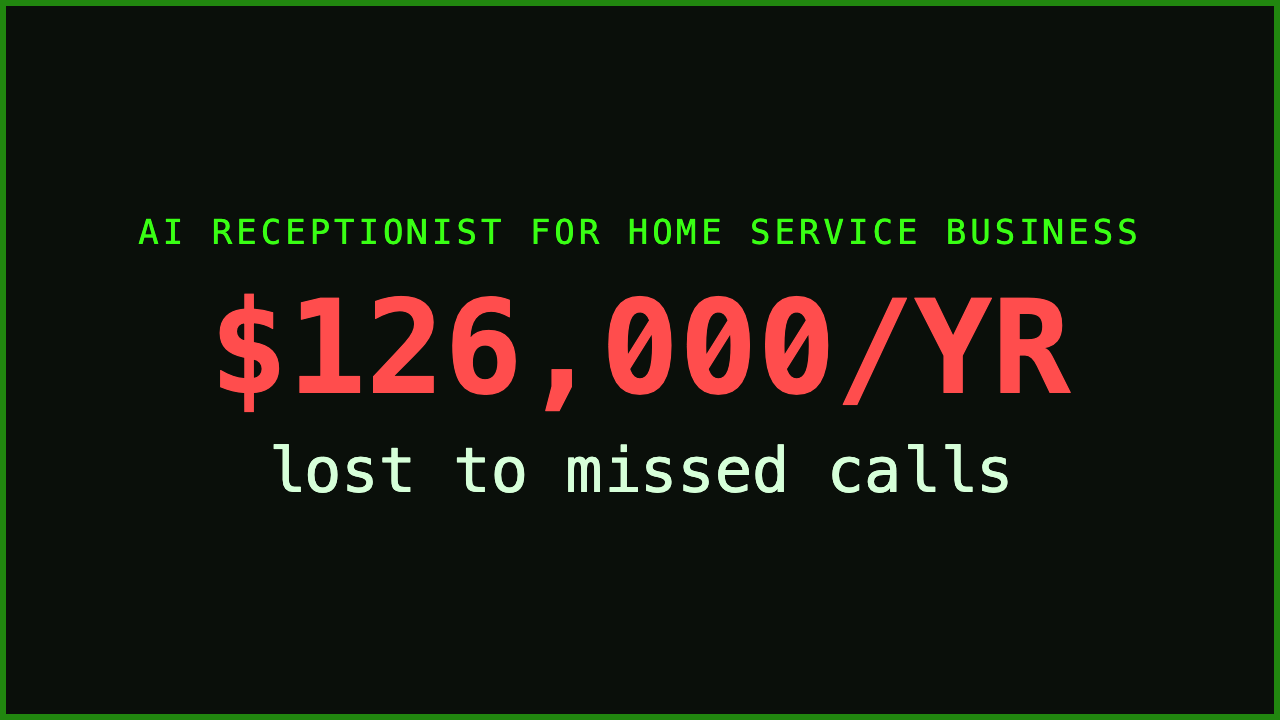
This is the actual build, recorded live, not a mockup. I show the exact setup, then let it take a real test call so you can hear what a caller hears.
Why home service businesses miss so many calls
Most of the people answering a home service phone are not sitting at a desk. They're under a sink, on a roof, or driving between jobs. The U.S. has over 5 million people working in specialty trades like plumbing, electrical, and HVAC, according to Bureau of Labor Statistics data, and almost none of them have a free hand to answer a ringing phone mid-job.
So the call goes to voicemail, or it just rings out. Nobody tracks an exact number on this for every trade, but every owner I talk to feels it the same way: the phone rings, and whoever could answer it is busy doing the actual work.
What the AI receptionist actually does
The mechanic is simple: answer, sort, book.
- Answer. It picks up before the second ring, every time, day or night.
- Sort. It tells urgent from routine in seconds. A burst pipe is not a routine tune up, and it treats them differently without anyone training it on that specific call.
- Book. For a routine request, it asks for a name, an address, what's wrong, and a time, the same 4 things any receptionist would ask, then puts the job straight on the calendar.
The sorting step is the part most people assume is harder than it is. You don't hand it a script for every possible emergency. You tell it what counts as urgent for this specific business, in plain language, the same way you'd explain it to a new hire on their first day. "A burst pipe or no heat in winter, treat that as urgent. A routine tune up can wait for a scheduled slot." It uses that to make the call the same way you would.
You can watch the triage and booking happen live at 1:30 in the video.
Watch it book a real appointment
This isn't a diagram of how it's supposed to work. Here's the actual calendar, with the actual appointment it booked during the test call:
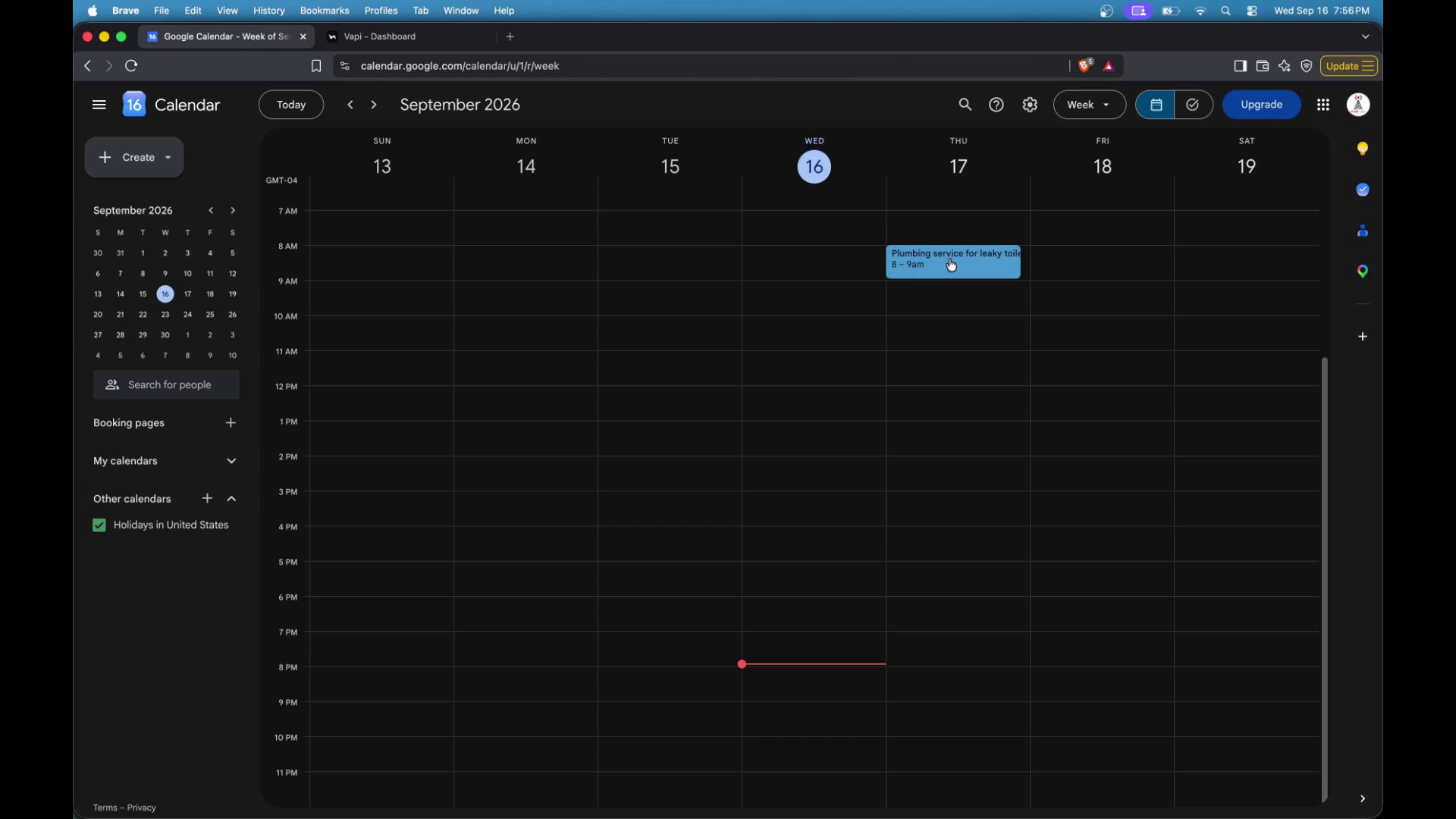
No one typed that in. The caller said what they needed, and it landed on the calendar before the call even ended.
Built live, nothing staged
I didn't script the test call or clean anything up after the fact. What you see in the video is the first real call it handled, including the pause while it worked out what to do next. If it had failed, that would be in the video too. The point of recording it live wasn't to show a perfect demo, it was to show whether this actually works when nobody's controlling the outcome.
I'll say plainly where the video isn't a perfect match either: a couple of the screen shots during the booking steps reuse footage from earlier in the same session rather than a frame-for-frame match of each exact moment, because the original recording ran out before every beat had its own clip. Nothing shown is fake, it's just not a perfectly matched cut everywhere. I'd rather tell you that than have you find it yourself.
Why this beats voicemail
Voicemail isn't really a safety net. It just holds a message and hopes someone calls back before the customer moves on to whoever answers next. Answering services that track this closely, like PATLive, put the share of missed callers who never call back at around 85%. Once that call is missed, you've mostly lost it, not delayed it.
An AI receptionist acts while the caller is still on the line. That's the whole difference. It's not a faster voicemail, it's something that does the job voicemail never could.
Is this right for your business
If you already answer every call yourself and never miss one, you don't need this. But if calls are slipping through while you're on a job, that's exactly the gap this closes.
This isn't limited to plumbing, either. The same answer-sort-book mechanic works for HVAC, electrical, landscaping, cleaning, or any trade where the owner or the only free hand is usually somewhere other than a desk phone. The urgent-versus-routine list changes by trade. The mechanic doesn't.
I build these for home service businesses already losing hours to manual work, and a missed call is usually the first thing worth fixing, because it's not just a lost hour, it's a lost customer who called your competitor next.
Walk me through a normal week on your free strategy call, and I'll tell you straight whether this is worth building for your business, no pressure either way.